Find automatic self loading mobile tower light for Construction, Events, Emergency
Source 30 automatic self loading mobile tower light units with varying power sources and lifting systems. Compare specifications including pole height, coverage area, and portability options for construction sites, outdoor events, and emergency response crews.
Key considerations
Products List




Comprehensive Sourcing Guide
Strategic Sourcing Guide for Automatic Self-Loading Mobile Tower Lights
Understanding the Core Product Architecture and Technical Specifications
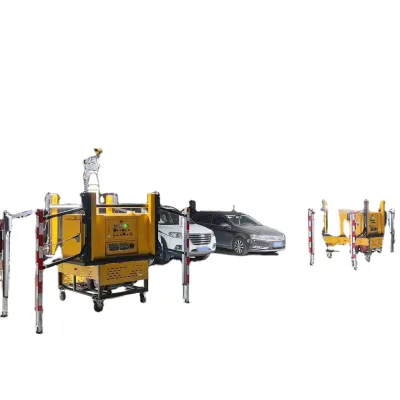
When sourcing an automatic self-loading mobile tower light, buyers must first distinguish between the broad category of mobile lighting units and the specific mechanical configurations available in the current market. The provided product data reveals a diverse landscape of specifications that directly impact procurement decisions. While the core keyword implies automation, the observed inventory includes units with manual lifting systems alongside those designed for trailer portability. This distinction is critical because the "automatic" functionality often refers to the hydraulic or mechanical deployment of the mast, whereas the lifting mechanism itself may vary between manual crank systems and fully automated hydraulic lifts depending on the specific model.
The technical baseline for these units typically involves a robust steel pole structure, often described as a three-section design to facilitate compact transport and maximum extension. In the observed data, specific models indicate a maximum height of 7 meters, achieved through a pole height of 7m, which is standard for site illumination requiring coverage of large areas. The structural integrity is supported by a steel pole material, ensuring durability against harsh environmental conditions. The rotation capability is a vital technical attribute, with observed units offering a 340-degree rotation range. This allows operators to direct light precisely where needed without repositioning the entire vehicle or trailer base.
Power delivery systems vary significantly across the supply base. Some units operate on electric power sources with a voltage of 230V at 50Hz, utilizing a single-phase 16A electric inlet. These are often stationary or semi-mobile units requiring a grid connection. Conversely, other units in the market are designed for remote operations, featuring a four-stroke engine with water cooling methods and a fuel tank capacity of 100L. These self-contained units provide AC three-phase output, making them suitable for emergency crews and standby units where grid power is unavailable. The light source itself is predominantly LED, offering high efficiency and longevity, with an IP66 rating to ensure protection against dust and powerful water jets. The total power consumption for specific models is observed at 640W, covering an area of up to 3000 square meters, which is a key metric for site managers planning illumination layouts.
Compliance, Certification, and Safety Standards Verification
Navigating the compliance landscape for mobile tower lights requires rigorous verification of standards, as the market contains units adhering to different national and international guidelines. While specific certification bodies are not explicitly named in the general product observations, buyers must verify that the equipment meets the safety standards relevant to their operating jurisdiction. The data indicates a standard weight classification for certain models, such as 650kg and 250kg, which serves as a proxy for the structural load and stability requirements. A unit weighing 550kg, for instance, suggests a heavy-duty construction capable of withstanding wind loads at its maximum extended height.
Buyers should specifically request documentation regarding the IP Rating, which is a critical safety and durability standard. The observed IP66 rating indicates a high level of ingress protection, essential for outdoor operations in rain or dusty environments. However, not all units in the general market may carry this specific rating; therefore, verification is mandatory. Additionally, the electrical safety of the power distribution system must be confirmed. Units with a 16A or 20A power distribution and a 230V/50Hz voltage rating must comply with local electrical codes. For units with engine-driven power generation, the cooling method (water cooling) and the four-stroke engine configuration must meet emissions and noise regulations applicable in the buyer's region.
The origin of the product is another compliance factor. The data shows origins in China and specifically Henan province. While this does not preclude quality, it necessitates a thorough check of the manufacturer's export compliance and the specific standards they claim to meet. Buyers should not assume that a product labeled with a specific standard, such as the 650KGS or 250KGS weight standards mentioned, implies full international certification without seeing the actual test reports. The "ISO 4190" standard mentioned in the background data is a general reference and should not be assumed to apply to the specific product without explicit confirmation from the supplier. Procurement teams must demand valid test certificates for the electrical systems, the lifting mechanism, and the structural integrity of the steel pole before finalizing any order.
Cost Drivers and Total Cost of Ownership Analysis
The pricing for automatic self-loading mobile tower lights is influenced by a complex array of factors, with the observed market range spanning from $100 to $8,020 USD. This wide disparity is not merely a reflection of brand value but is driven by fundamental differences in specifications, power sources, and customization levels. The lower end of the price spectrum likely corresponds to simpler, manually operated units or those with basic electric power requirements, while the higher end reflects fully automated, engine-driven units with advanced features like water cooling, three-phase output, and extensive customization options.
Total Cost of Ownership (TCO) is a more accurate metric for procurement than the initial purchase price. A unit with a 100L fuel tank and a four-stroke engine will have a higher upfront cost but offers greater operational flexibility for remote sites. In contrast, a 640W electric unit with a 230V inlet may be cheaper to acquire but incurs ongoing costs related to fuel logistics or grid connection infrastructure. The weight of the unit, ranging from 250kg to 650kg, also impacts transportation costs. Heavier units, such as the 550kg model, may require specialized transport equipment and incur higher shipping fees, which can significantly affect the overall budget.
Customization is another significant cost driver. The data confirms that customization is available for these products. Buyers seeking specific color temperatures, such as Cool White, or unique dimensions like a 2180mm length and 1130mm width, may face additional costs. The packing method, whether a standard export plywood case or a wooden case, also influences the final price and the protection level during transit. Furthermore, the lead time and the Minimum Order Quantity (MOQ), which ranges from 1 to 22 units, play a role in the cost structure. Smaller orders may attract a premium per unit, while bulk purchases can leverage economies of scale. Buyers must evaluate the trade-off between the initial price and the long-term operational efficiency, fuel consumption, and maintenance requirements of the specific model selected.
Typical Applications and Operational Scenarios
The versatility of mobile tower lights makes them suitable for a wide range of applications, from construction sites to emergency response scenarios. The data highlights specific usage categories, including common units, standby units, and emergency crew support. This classification indicates that these units are designed to function in both planned and unplanned situations. For construction and industrial sites, the 3000 square meter coverage area provided by a 640W LED system is ideal for illuminating large work zones, ensuring safety and productivity during night shifts. The 340-degree rotation capability allows for flexible lighting angles, which is crucial for complex site layouts.
In emergency and standby scenarios, the portability and self-sufficiency of the units are paramount. The "Trailer Type" condition of use suggests that these units are designed for rapid deployment. The four-stroke engine with water cooling ensures reliable operation in continuous duty cycles, which is essential during disaster relief or power outages. The IP66 rating ensures that the lights remain operational even in adverse weather conditions, such as heavy rain or high winds. The "Ordinary" land use type indicates suitability for general outdoor environments, but the robust construction also supports more demanding applications.
The distinction between electric and fuel-powered units dictates their specific application. Electric units with a 230V/50Hz input are best suited for semi-permanent installations where grid power is accessible, such as temporary event lighting or fixed construction sites. Fuel-powered units, with their 100L fuel tanks and AC three-phase output, are indispensable for remote locations, mining operations, or military exercises where no grid infrastructure exists. The "Portable Lamp" and "Light Tower" designations further emphasize the dual nature of these products: they are both stationary light sources and mobile assets that can be moved to different locations as project needs evolve.
Supplier Evaluation and Quality Control Protocols
Evaluating suppliers for mobile tower lights requires a systematic approach that goes beyond price comparison. Buyers must assess the supplier's ability to provide consistent quality, technical support, and after-sales service. The availability of customization suggests that the supplier has the manufacturing flexibility to meet specific client requirements, but this also requires a robust quality control process to ensure that customizations do not compromise the unit's integrity. The observed production standards, such as the 650KGS and 250KGS classifications, should be treated as internal benchmarks that the supplier must consistently meet.
Quality control protocols should focus on the critical components of the tower light. The steel pole construction must be inspected for weld quality and material thickness to ensure it can support the maximum height of 7 meters without buckling. The lifting system, whether manual or automatic, must be tested for smooth operation and safety locks. For engine-driven units, the cooling system and fuel tank integrity are critical; buyers should request test results for the four-stroke engine's performance under load. The electrical system, including the 16A/20A power distribution and the IP66 rating, must be verified through independent testing to ensure compliance with safety standards.
Buyers should also evaluate the supplier's packaging and logistics capabilities. The use of standard export plywood cases or wooden cases indicates a commitment to protecting the product during transit, but the supplier must demonstrate that their packaging meets international shipping standards. The origin of the product, whether from China or specifically Henan, should be verified against the supplier's claims to ensure transparency. Finally, the supplier's track record in providing spare parts and technical support is essential for long-term procurement success. A supplier that offers comprehensive documentation and responsive support will minimize downtime and ensure the longevity of the investment.
Long-Term Procurement and Maintenance Considerations
Sourcing mobile tower lights is not a one-time transaction but a long-term commitment that requires careful planning for maintenance and lifecycle management. The durability of the unit, indicated by the steel material and IP66 rating, suggests a long operational life, but regular maintenance is essential to sustain performance. Buyers should establish a maintenance schedule that includes inspecting the lifting mechanism, checking the fuel system for leaks, and testing the electrical connections. The 100L fuel tank capacity, while beneficial for extended operation, requires careful management to prevent fuel degradation over time.
The customization options available in the market offer flexibility but also introduce complexity in maintenance. If a buyer opts for a specific color temperature or unique dimensions, they must ensure that replacement parts are readily available. The standard export packaging and the specific model numbers, such as GLTK7050-K101 or GLTG750, should be used to track inventory and order spare parts efficiently. Buyers should also consider the environmental impact of their procurement choices, opting for units with energy-efficient LED light sources and engines that meet current emissions standards.
Finally, the procurement strategy should include a plan for end-of-life disposal. The steel construction and electronic components of the tower lights must be disposed of in accordance with local environmental regulations. By selecting suppliers who adhere to responsible manufacturing practices and provide clear disposal guidelines, buyers can ensure that their procurement activities align with corporate sustainability goals. The wide price range and diverse specifications observed in the market provide ample opportunity for buyers to select units that best fit their long-term operational needs, provided they conduct thorough due diligence and maintain a proactive approach to asset management.
FAQs
How is the lifting system operated on these tower lights?
The lifting system is operated manually using a crank mechanism. This manual approach ensures reliability in various conditions while supporting a maximum height of 7 meters for effective site illumination.
What power source options are available for these units?
Units are available with either electric power sources or solar power options. Electric models typically require a 230V input, while solar variants offer portability for remote locations without grid access.
Which specifications define the structural dimensions of the pole?
The pole is constructed from steel with a maximum height of 7 meters. It features a three-section design and allows for a 340-degree rotation to direct light precisely where needed.
Can these tower lights be customized for specific project needs?
Yes, customization is available for these mobile tower lights. Buyers can request specific configurations to match unique operational requirements while maintaining standard export packaging for safe transport.
What is the coverage area provided by the lighting system?
The lighting system provides a coverage area of up to 3000 square meters. This capacity is achieved using LED light sources with a total power consumption of 640W for efficient illumination.
How does the unit ensure protection against environmental elements?
The units feature an IP66 rating to ensure protection against dust and powerful water jets. This high ingress protection level guarantees operational reliability in harsh outdoor conditions and adverse weather.